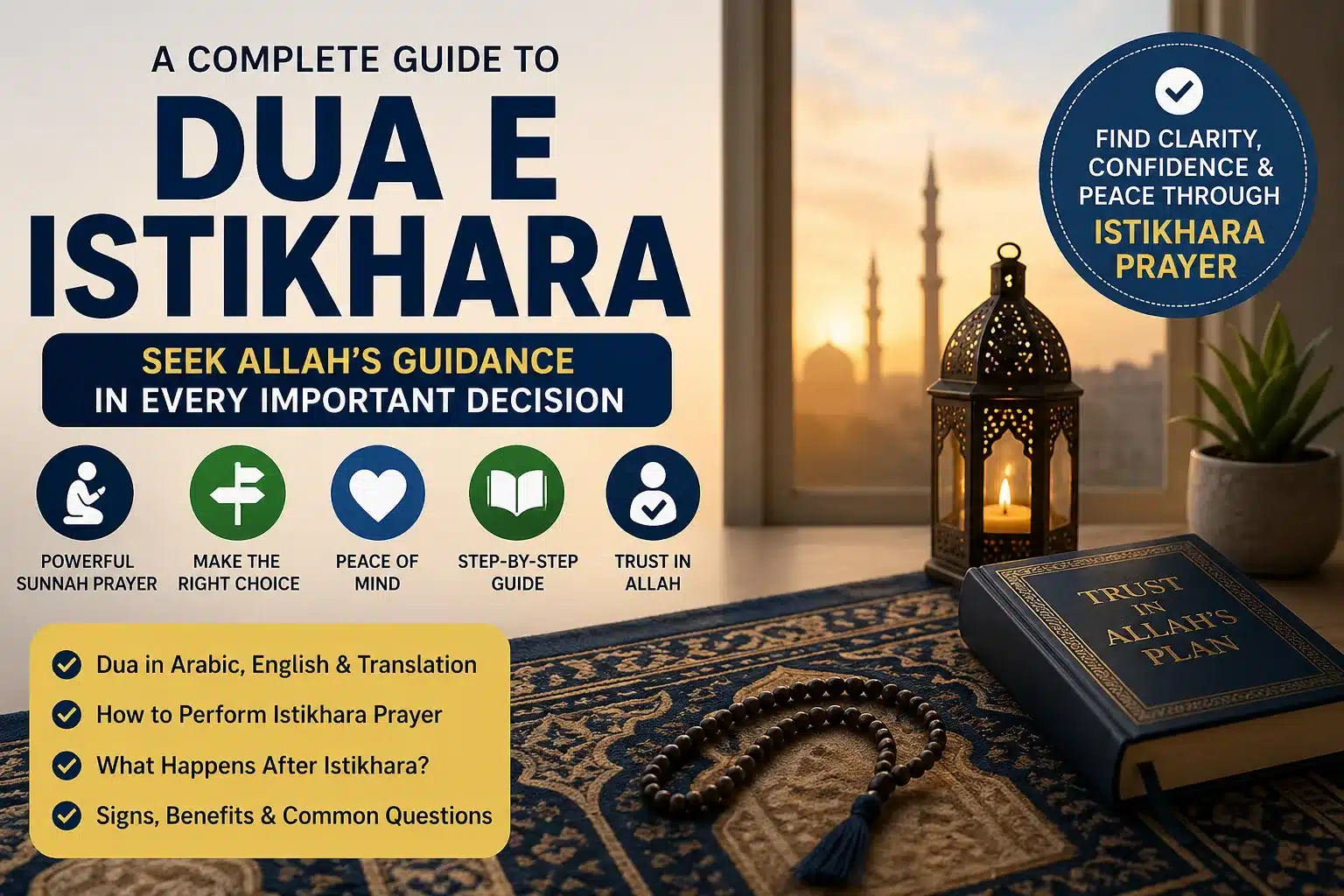
Dua e Istikhara: Complete Guide for Guidance, Peace & Right Decisions
What is Dua e Istikhara?
Dua e Istikhara means “seeking goodness from Allah.” It is a Sunnah taught by Prophet Muhammad (ﷺ) for making decisions when you feel unsure.
This prayer is not just about choosing between options. It is about trusting Allah completely. When you perform Istikhara, you ask Allah to guide you toward what is best and protect you from what is harmful.
Definition of Dua e Istikhara
Dua e Istikhara is an Islamic prayer performed to seek Allah’s guidance in making the right decision. It involves two rakats of voluntary prayer followed by a specific supplication asking Allah for what is best.
When Should You Perform Dua e Istikhara?
- Marriage decisions
- Job opportunities
- Business choices
- Education decisions
- Major life changes
How to Perform Dua e Istikhara – Step-by-Step Guide
-
Perform Two Rakat of Non-Obligatory (Nafl) Prayer
The first step is to perform two units (rakat) of voluntary prayer with the sincere intention of Istikhara. This is done at any time when prayer is not prohibited, preferably at night for solitude and focus.
-
Recite the Istikhara Supplication
After completing the two rakats, recite the following Dua e Istikhara with full humility and attention:
اللّهُمّ إنّي أستخيرك بعلمك وأستقدرك بقدرتك وأسألك من فضلك العظيم، فإنّك تقدر ولا أقدر وتعلم ولا أعلم وأنت علّام الغيوب، اللّهمّ إن كنت تعلم أنّ هذا الأمر خيرٌ لي في ديني ومعاشي وعاقبة أمري (أو قال عاجل أمري وآجله) فاقدره لي ويسّره لي ثمّ بارك لي فيه، وإن كنت تعلم أنّ هذا الأمر شرٌّ لي في ديني ومعاشي وعاقبة أمري (أو قال في عاجل أمري وآجله) فاصرفه عنّي واصرفني عنه، واقدر لي الخير حيث كان ثمّ رضّني به.
Translation:
“O Allah, I seek Your guidance [in making a choice] by Your knowledge, and I seek ability by Your power, and I ask You from Your great bounty. You have power, I have none. And You know, I know not. You are the Knower of hidden things. O Allah, if in Your knowledge, this matter is good for me in my religion, my livelihood, and for my life in the Hereafter, then make it easy for me and bless it for me. But if in Your knowledge, this matter is bad for me in my religion, my livelihood, and for my life in the Hereafter, then turn it away from me, and turn me away from it, and ordain for me the good wherever it may be and make me pleased with it.”
-
Mention Your Concern
When you reach the part of the dua that says “هذا الأمر (this matter),” you should think about or mention the specific issue you’re seeking guidance for—whether silently in your heart or audibly.
What Happens After Istikhara?
- Feeling of peace or discomfort
- Ease or difficulty in the matter
- Events guiding your path
Important: Dreams are NOT necessary.
Common Misconceptions About Dua e Istikhara
-
Istikhara Is Not Fortune Telling
Istikhara is not a form of prediction or mystical revelation. It is a sincere supplication seeking divine wisdom. It involves placing your trust in Allah’s decree rather than expecting supernatural signs.
-
Others Cannot Perform It on Your Behalf
Though scholars have allowed someone to make Istikhara on your behalf if you are unable, the Prophet (ﷺ) taught each person to perform it themselves. Personal sincerity and intention are key.
-
Istikhara Doesn’t Replace Effort
You must still use reason, consult knowledgeable people, and weigh your options. Istikhara is not meant to replace consultation (Shura) or personal responsibility but rather to supplement it with divine insight.
Etiquettes of Making Dua e Istikhara
- Be in a state of wudhu (ablution)
- Choose a clean, peaceful environment
- Face the Qibla while making dua
- Recite with sincerity, humility, and conviction
- Avoid rushing for signs; be patient and open to Allah’s guidance
The Wisdom Behind Istikhara
The core essence of Dua e Istikhara is submitting to Allah’s infinite wisdom. It reflects the believer’s tawakkul (trust in Allah) and a clear detachment from ego-driven decisions. Whether the outcome aligns with your desire or not, the prayer ensures that what unfolds is the best possible choice for your spiritual and worldly well-being.
As mentioned in the hadith narrated by Jabir bin ‘Abdullah (RA):
” The Prophet (p.b.u.h) used to teach us the way of doing Istikhara (Istikhara means to ask Allah to guide one to the right sort of action concerning any job or a deed), in all matters as he taught us the Suras of the Qur’an. ”
Reference : Sahih al-Bukhari 1166
This profound statement underlines the importance of incorporating Istikhara into every major life decision.
Should Istikhara Be Performed for Marriage?
Absolutely. One of the most common reasons Muslims perform Istikhara is before accepting or proposing marriage. It allows both individuals to rely on Allah’s wisdom, ensuring the union is beneficial for both their dunya (worldly life) and akhirah (Hereafter).
Marriage Istikhara helps in:
- Finding spiritual compatibility
- Seeking long-term harmony
- Avoiding hidden pitfalls
You can perform Istikhara after initial discussions or when you are seriously considering the proposal. If both parties perform it, and Allah decrees it as beneficial, paths will naturally open.
Frequently Asked Questions
1. Can I do Istikhara without prayer?
Yes, but prayer is recommended for best results.
2. How many times should I do Istikhara?
You can repeat it for 7 days if needed.
3. Is dream necessary?
No, guidance comes in many forms.
Final Thoughts
Author Profile

- Connect Via WhatsApp: +1 (786) 600-4511
-
Nadiya Khan is a devoted scholar of Islamic Studies and a seasoned writer with over 12 years of experience in crafting spiritually enriching Islamic content. Her expertise lies in presenting authentic duas and teachings from the Qur’an and Sunnah, rooted in the scholarly traditions of all four Sunni madhhabs - Hanafi, Shafi’i, Maliki, and Hanbali.
Through her work at the Islamic Dua Knowledge Hub, Nadiya brings timeless wisdom to life, offering Muslims practical, heartfelt guidance for navigating daily challenges with faith, clarity, and peace. Her writing is known for its precision, emotional depth, and unwavering commitment to authenticity, helping readers connect more deeply with Allah ﷻ through the power of sincere supplication.
Driven by a clear mission, Nadiya seeks to revive the practice of dua as a daily source of comfort, gratitude, and spiritual intimacy with the Creator. Her words are not just informative, they are a gentle invitation to reflect, reconnect, and rise.
🤝 Editorial Collaboration Opportunities
We welcome guest contributions from professionals, organizations, and service providers aligned with our values. For a nominal fee, our Islamic Guest Post service ensures your message reaches a dedicated audience while supporting the continued growth of this meaningful platform.
Latest entries
 Quran Majeed classesJuly 18, 2026Learn Shia Quran Teaching Online: The Best Guide for Kids and Families
- Islamic DuaJuly 18, 2026Dua After Eating: Complete Islamic Guide with Arabic, Meaning, Benefits
- Islamic Birthday WishesJuly 16, 2026Best Islamic Birthday Wishes (2026): 150+ Duas, Messages & Prayers for Family and Friends
- Islamic DuaJuly 13, 20264 Essential Daily Duas Every Muslim Should Know (With Meaning)





I have been exploring different platforms lately and this one caught my eye for its clean layout and honest terms.