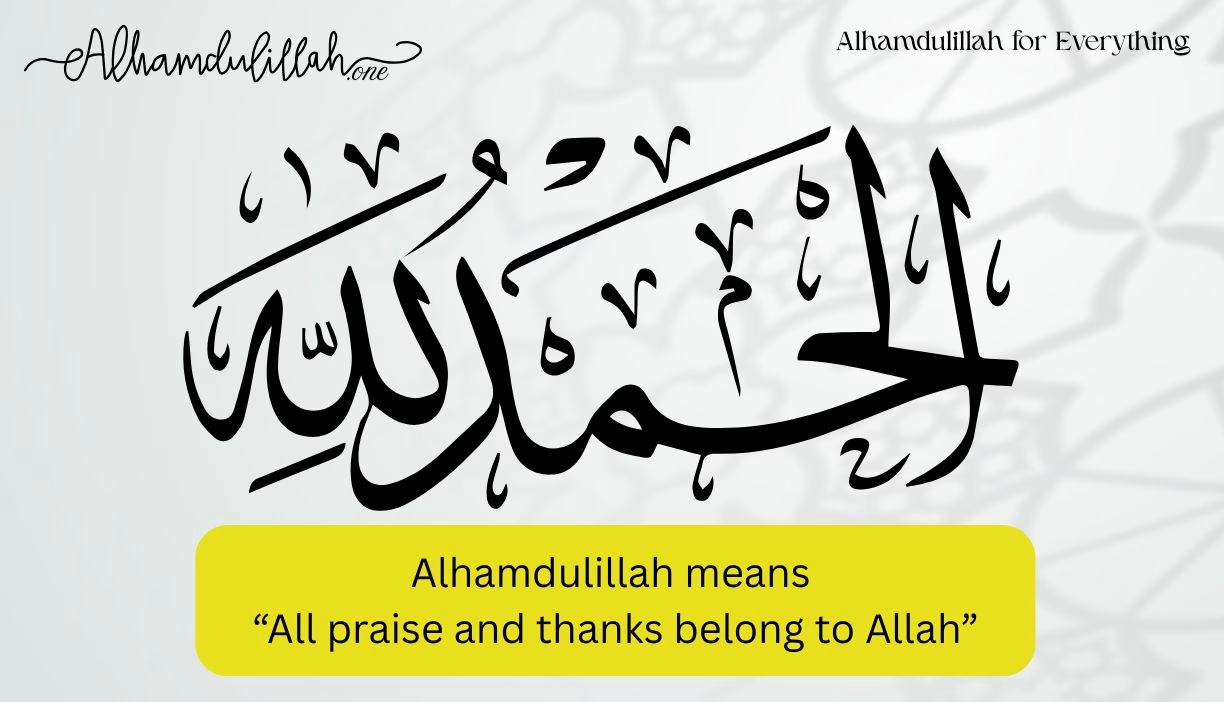
The expression “Alhamdulillah” is one of the most frequently used phrases in Islam. It carries layers of gratitude, faith, acknowledgement, and humility. Muslims use it in moments of joy, difficulty, achievement, and reflection, recognizing that every blessing comes from Allah alone. Understanding the deeper Alhamdulillah meaning strengthens spirituality and nurtures a heart that remembers its Creator in all circumstances.

What Is the Meaning of Alhamdulillah
This comprehensive guide explores the meaning, translation, pronunciation, benefits, usage examples, hadith references, Arabic writing, and common spelling variations. It is written according to mainstream Sunni scholarship accepted across the four major madhhabs.
Arabic Script & Literal Translation
ٱلْـحَمْدُ لِلَّٰهِ – Al-ḥamdu li-llāh
Word-by-word:
- Al-hamd—all praise
- li – belongs to / for
- Allah—the One True God
Together:
“Every type of praise, in its perfect form, belongs only to Allah.”
When Do Muslims Say Alhamdulillah? (Usage Guide)
Muslims say “Alhamdulillah” in the following situations:
1. After receiving blessings
- Good news
- Success
- Health
- Food
- Safety
- Family moments
2. During challenges
- When sick
- In hardship
- After loss
- During trials
The Prophet ﷺ taught that gratitude in difficulty is a sign of deep faith.
3. As daily remembrance
Muslims say “Alhamdulillah” constantly to keep their hearts connected to Allah.
4. After sneezing
The Sunnah response to sneezing is saying “Alhamdulillah,” followed by “Yarhamuk Allah” from others.
5. When waking up
The Prophet ﷺ said a believer should say Alhamdulillah upon waking because Allah restored the soul after sleep.
6. After finishing something
- Work
- Prayer
- A meal
- A task
Muslims recite Alhamdulillah in many contexts. Common occasions include:
- After receiving blessings—good news, recovery, food, success, or safety.
- During hardship—as an expression of trust and patience.
- Daily remembrance—to keep the heart mindful of Allah.
- After sneezing—following the Prophet’s ﷺ practice.
- On waking—thanking Allah for life and health.
- After completing tasks—work, prayer, study, or a meal.
Using the phrase with awareness turns everyday actions into moments of worship (ʿibādah).
Hadith: Virtues & Examples
“Alhamdulillah fills the scale.”
(Sahih Muslim)
“Allah is pleased with His servant who praises Him when eating or drinking.”
(Sahih Muslim)
These hadith emphasize the ease and reward of gratitude. The Prophet ﷺ encouraged consistent remembrance, showing that small phrases carry great weight in the believer’s record.
Spiritual Benefits of Saying Alhamdulillah
1. Strengthens gratitude
Regularly saying “Alhamdulillah” trains the heart to notice and appreciate blessings rather than focusing on lack.
2. Increases blessings
The Qur’an promises increase for those who give thanks: “If you are grateful, I will surely increase you”
(Qur’an 14:7).
3. Builds resilience
Expressing gratitude during trials fosters patience and perspective, helping people endure hardships with trust.
4. Guards against arrogance
Recognizing that achievements come from Allah discourages pride and encourages humility.
5. Brings inner peace
A grateful heart often experiences more contentment and calmness in daily life.
Common Spelling & Transliteration Variations
People search for many different spellings. Some are incorrect but widely used:
- Alhamdulillah
- Alhamdullilah
- Alhamdulilah
- Alhamdullilah
- Alhamdoullah
- Alhumdulillah
- Alhamdu lillah
- Alhamduillah
- Alhamdillah
All reflect the same Arabic phrase and meaning. Use the Arabic script for the most accurate form.
Alhamdulillah Compared to Other Common Phrases
| Phrase |
Meaning |
Typical Use |
| Alhamdulillah |
All praise belongs to Allah |
Gratitude, contentment |
| SubhanAllah |
Glory be to Allah |
Awe, amazement |
| Allahu Akbar |
Allah is the greatest. |
Affirmation of divine greatness |
| Mashallah |
What Allah has willed |
Admiration without envy |
Correct Pronunciation
Say it as “Al-ham-du-lil-lah.” Place a gentle emphasis on hamd (praise).
Frequently Asked Questions
Is Alhamdulillah a dua?
Alhamdulillah functions primarily as praise and gratitude. While not a supplication (dua) in form, it counts as a form of worship and gains reward.
Is it Sunnah to say Alhamdulillah after sneezing?
Yes. The Prophet ﷺ taught saying Alhamdulillah after sneezing; those who hear respond with Yarhamuk Allah (May Allah have mercy on you).
Can I say Alhamdulillah during hardship?
Indeed. Expressing Alhamdulillah in difficulty demonstrates trust and patience; it helps the heart find perspective and reliance on Allah.
Conclusion
Understanding the full Alhamdulillah meaning transforms it from a phrase into a living practise. When people say it with awareness, they build gratitude, humility, and a stronger connection to Allah. Make it part of daily life—after meals, upon waking, in joy, and in trial—and allow its meaning to shape the heart.
Explore related guides: Subhanallah Meaning, InshaAllah Meaning, Alhamdulillah