Complete Guide to Wudu (Ablution) in Islam: Steps, Duas, and Common Questions Answered
Complete Guide to Wudu (Ablution) in Islam
What Is Wudu in Islam?
Wudu (وضوء), or ablution, is a spiritual purification ritual in Islam that involves washing specific parts of the body. It is a prerequisite for the validity of several acts of worship, most importantly Salah (prayer). The practice of wudu symbolizes both physical and spiritual cleanliness and is emphasized in both the Qur’an and the Hadith of the Prophet Muhammad (peace be upon him).
Importance of Wudu in Islam
The Qur’an states in Surah Al-Ma’idah (5:6):
O believers! When you rise up for prayer, wash your faces and your hands up to the elbows, wipe your heads, and wash your feet to the ankles.
This verse lays down the obligatory steps of wudu, making it a cornerstone of Islamic practice. A Muslim is not permitted to perform Salah without being in a state of ritual purity.
How to Make Wudu (Step-by-Step Guide)
1. Intention (Niyyah)
Before beginning wudu, one must have the sincere intention in their heart to perform ablution for prayer or worship. The intention is not necessarily vocalized but must be present in the heart.
2. Saying Bismillah
Start by saying “Bismillah” (In the name of Allah). This invocation brings blessings and aligns the act with spiritual goals.
3. Washing the Hands (3 times)
Wash both hands up to the wrists three times, starting with the right hand. Make sure water reaches between the fingers and under the nails.
4. Rinsing the Mouth (3 times)
Take water into the mouth using the right hand and rinse thoroughly three times. If fasting, take care not to swallow the water.
5. Rinsing the Nose (3 times)
Sniff water gently into the nose and then expel it, also three times. This is known as istinshaq and istinthar.
6. Washing the Face (3 times)
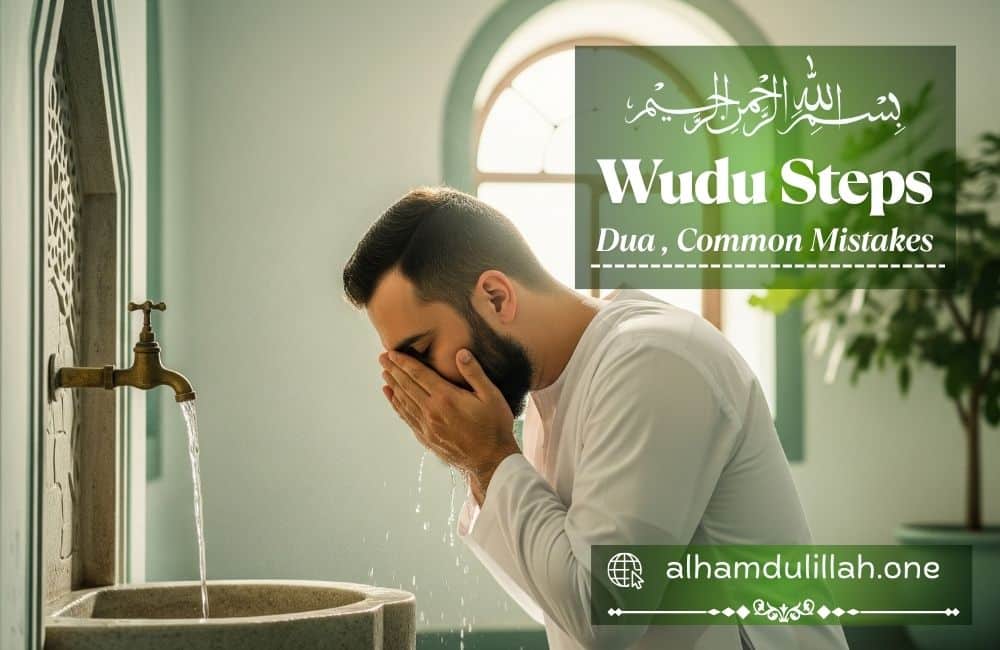
Wash the entire face from the hairline to the chin and from ear to ear three times. Ensure water reaches all areas, including the edges.
7. Washing the Arms (3 times)
Wash both arms from the fingertips to the elbows, starting with the right arm, three times. Every part of the skin should be wet.
8. Wiping the Head (Masah) (1 time)
Wet the hands and wipe over the head once, from the front to the back and back to the front.
9. Wiping the Ears (1 time)
Using the same wet hands, insert the index fingers into the ears and wipe the back of the ears with the thumbs.
10. Washing the Feet (3 times)
Wash both feet, including the ankle, three times, starting with the right foot. Make sure water reaches between the toes.
How to Make Wudu for Women
The steps of wudu for women are exactly the same as for men. However, attention should be paid to:
- Removing nail polish, which forms a barrier and prevents water from reaching the skin.
- Ensuring hair is wiped, even if covered, as the act of masah (wiping over the head) is obligatory.
- If wearing makeup, ensure it’s non-waterproof or removed before performing wudu.
Dua Before Wudu
While there’s no specific dua prescribed before wudu apart from saying “Bismillah”, it is highly encouraged to begin with this phrase for blessings.
The dua is:

Bismillah
In the Name of Allah
Reference: Hisn al-Muslim 12
Dua After Wudu
The most authentic dua after completing wudu, reported in Sahih Muslim:
“Ashhadu an la ilaha illallah wahdahu la sharika lahu wa ashhadu anna Muhammadan ‘abduhu wa rasuluh.”
Translation:
“I bear witness that there is no god but Allah alone; He has no partner. And I bear witness that Muhammad is His servant and Messenger.”
In another narration, the reward for saying this dua:
“Whoever says this after wudu, all eight gates of Paradise will open for him.”
Reference : Sunan an-Nasa’i 148
What Breaks Wudu?
Wudu remains valid until a specific nullifier occurs. Here are common actions that break wudu:
- Natural discharges: Urine, feces, gas (passing wind).
- Deep sleep: That disconnects one from their senses.
- Loss of consciousness: Fainting or insanity.
- Touching private parts: Without a barrier.
- Intimate contact (depending on madhhab): Some scholars consider skin-to-skin contact with the opposite gender a nullifier of wudu.
How to Do Ablution Wudu Quickly in Case of Urgency
In cases of limited time, follow the obligatory acts of wudu:
- Face
- Arms up to elbows
- Wiping head
- Feet up to ankles
While sunnah acts should not be skipped without reason, this minimalist approach still fulfills the requirement of ritual purity.
Common Mistakes in Wudu
- Not washing required areas completely (e.g., elbows or ankles left dry).
- Using too much water: Wudu should be done with moderation.
- Skipping intention: Though not verbal, it must be present.
- Touching private parts after wudu without washing again.
- Delaying wudu unnecessarily after a nullifier occurs.
Virtues of Performing Wudu Regularly
The Prophet Muhammad (peace be upon him) said:
When a bondsman-a Muslim or a believer-washes his face (in course of ablution), every sin he contemplated with his eyes, will be washed away from his face along with water, or with the last drop of water; when he washes his hands, every sin they wrought will be effaced from his hands with the water, or with the last drop of water; and when he washes his feet, every sin towards which his feet have walked will be washed away with the water or with the last drop of water with the result that he comes out pure from all sins.
Reference : Sahih Muslim 244
Wudu is not just a pre-prayer ritual; it is a means of forgiveness and elevation in ranks.
Conclusion
Performing wudu is an essential and sacred act in Islam. It represents cleanliness, discipline, and readiness for communion with Allah. Knowing how to do wudu properly, the steps of ablution, and the duas before and after wudu helps us perfect our worship and align with the Sunnah of the Prophet ﷺ. Whether you’re learning how to make wudu for the first time or reviewing the process, always remember that wudu is both an outward and inward act of purification.
Author Profile

- Connect Via WhatsApp: +1 (786) 600-4511
-
Nadiya Khan is a devoted scholar of Islamic Studies and a seasoned writer with over 12 years of experience in crafting spiritually enriching Islamic content. Her expertise lies in presenting authentic duas and teachings from the Qur’an and Sunnah, rooted in the scholarly traditions of all four Sunni madhhabs - Hanafi, Shafi’i, Maliki, and Hanbali.
Through her work at the Islamic Dua Knowledge Hub, Nadiya brings timeless wisdom to life, offering Muslims practical, heartfelt guidance for navigating daily challenges with faith, clarity, and peace. Her writing is known for its precision, emotional depth, and unwavering commitment to authenticity, helping readers connect more deeply with Allah ﷻ through the power of sincere supplication.
Driven by a clear mission, Nadiya seeks to revive the practice of dua as a daily source of comfort, gratitude, and spiritual intimacy with the Creator. Her words are not just informative, they are a gentle invitation to reflect, reconnect, and rise.
🤝 Editorial Collaboration Opportunities
We welcome guest contributions from professionals, organizations, and service providers aligned with our values. For a nominal fee, our Islamic Guest Post service ensures your message reaches a dedicated audience while supporting the continued growth of this meaningful platform.
Latest entries
 Quran Majeed classesJuly 18, 2026Learn Shia Quran Teaching Online: The Best Guide for Kids and Families
- Islamic DuaJuly 18, 2026Dua After Eating: Complete Islamic Guide with Arabic, Meaning, Benefits
- Islamic Birthday WishesJuly 16, 2026Best Islamic Birthday Wishes (2026): 150+ Duas, Messages & Prayers for Family and Friends
- Islamic DuaJuly 13, 20264 Essential Daily Duas Every Muslim Should Know (With Meaning)