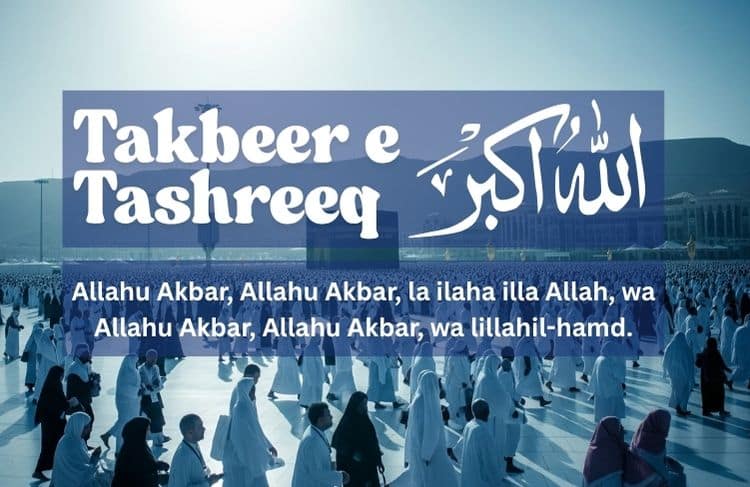
Takbeer e Tashreeq – A Spiritual Chant that Echoes the Glory of Allah
In the beautiful rhythm of Islamic worship, few expressions resonate with the soul like Takbeer e Tashreeq. This special declaration of Allah’s greatness is not just a verbal utterance; it is a spiritual anthem that fills the skies during the most sacred days of Dhul Hijjah.
Simple in words, yet mighty in meaning, Takbeer e Tashreeq reminds us of the glory, majesty, and oneness of Allah (سُبْحَانَهُ وَتَعَالَى). Whether you’re surrounded by a crowd at the mosque or quietly standing in prayer at home, this divinely inspired chant connects hearts, transcends time, and draws you closer to the Divine.
Takbeer e Tashreeq
What Is Takbeer e Tashreeq?
Takbeer e Tashreeq refers to a specific set of phrases glorifying Allah that Muslims recite during a defined period each year, from the Fajr of 9th Dhul Hijjah until the Asr of 13th Dhul Hijjah.
اللَّهُ أَكْبَرُ، اللَّهُ أَكْبَرُ، لَا إِلَٰهَ إِلَّا اللَّهُ، وَاللَّهُ أَكْبَرُ، اللَّهُ أَكْبَرُ، وَلِلَّهِ الْحَمْدُ
Transliteration:
Allahu Akbar, Allahu Akbar, la ilaha illa Allah, wa Allahu Akbar, Allahu Akbar, wa lillahil-hamd.
Translation:
Allah is the Greatest, Allah is the Greatest. There is no god but Allah, and Allah is the Greatest, Allah is the Greatest, and to Allah belongs all praise.
This divine chant celebrates the greatness of Allah and is a key part of the Eid al-Adha rituals, as well as the days of Tashreeq.
Origin and Hadith Reference
The practice of Takbeer e Tashreeq is derived from the Sunnah of the Prophet Muhammad ﷺ and the practices of the Companions (Sahabah). It has been narrated:
“Say your Takbeer aloud, for the days of Tashreeq are the days of eating, drinking, and remembering Allah.”
(Musnad Ahmad, Hadith 5401 – Hasan)
Sayyiduna Ali رضي الله عنه and Sayyiduna Ibn Mas’ud رضي الله عنه would both loudly declare Takbeer after each obligatory prayer during the days of Tashreeq.
When to Recite Takbeer e Tashreeq?
Start: Fajr of 9th Dhul Hijjah (Day of Arafah)
End: Asr of 13th Dhul Hijjah (5 days total)
Recite it once after every fardh (obligatory) prayer. This applies to men, women, residents, and travelers alike—though men are encouraged to say it aloud.
Each echo of Takbeer during these sacred days is a spiritual seed sown into your heart, blossoming into light, peace, and divine nearness.
Significance and Spiritual Benefits
- Affirmation of Tawheed
The Takbeer reaffirms that there is no god but Allah—a declaration that refreshes your Imaan (faith).
- Magnifying Allah’s Greatness
By saying Allahu Akbar, you elevate Allah above all things, reminding your soul that no problem is greater than your Lord.
- Unity of the Ummah
When Muslims worldwide echo the same words in harmony, it binds hearts and unites souls in glorifying the Creator.
- Obedience to Sunnah
You earn the reward of following the practice of the Prophet ﷺ and the noble Companions.
There is a certain magic in joining a universal rhythm of remembrance—when every Takbeer becomes a heartbeat of worship, a whisper of love for Allah.
The “Magical Words” of Remembrance
Let your heart chant:
Allahu Akbar… Let every Takbeer lift the burdens from your heart.
La ilaha illa Allah… Let this truth illuminate your soul in darkness.
Wa lillahil hamd… Let every gratitude fall like rose petals at the Throne of the Most Merciful.
In these words lie comfort, power, and a reminder that Allah is in control of your life, your struggles, and your ultimate peace.
Practical Tips to Make the Most of Takbeer e Tashreeq
- Make a habit of reciting it after every Fardh prayer during the 5 days.
- Involve your family—teach your children and encourage recitation together.
- Write it on a sticky note and place it where you pray or work.
- Say it with focus, understanding, and presence—not just as a ritual.
- Recite it aloud if you’re male (unless in a place where it disturbs others).
Why Is It Called “Tashreeq”?
The term “Tashreeq” is linked to the sun-drying (sharq) of meat after the Eid al-Adha sacrifices. During the days of Tashreeq, Muslims preserve meat, celebrate Eid, and engage in remembrance (dhikr) of Allah.
As meat was sun-dried, hearts were being sunlit with the warmth of gratitude and Takbeer.
Are There Penalties for Missing It?
Reciting Takbeer e Tashreeq is wajib (compulsory) according to many scholars, especially for men, though women are also encouraged. Forgetting occasionally is not sinful, but intentionally neglecting it is discouraged.
Emotional Impact of Takbeer
The Takbeer is more than a chant—it’s a sacred melody of the soul:
- In moments of sadness, it uplifts.
- In times of uncertainty, it grounds.
- In seasons of celebration, it completes the joy.
Say it with your heart, not just your tongue. Each Takbeer can be a whisper of love, a cry for help, or a celebration of blessings—all in one.
