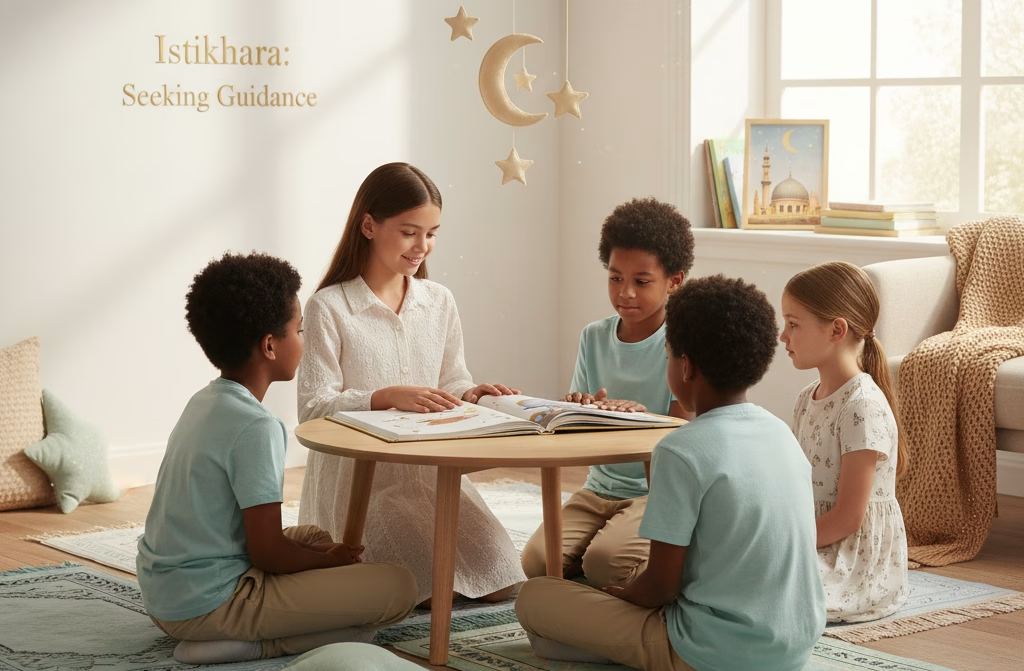
Teaching Children About Istikhara: Building Trust in Allah Early
As parents, we always want the best for our children. We teach them how to pray, how to be kind, and how to study hard. But one thing many parents forget to teach is how to ask Allah for guidance when making decisions. Teaching children about Istikhara from a young age is actually very important because it builds their relationship with Allah and helps them trust Him throughout their lives.
Why Should We Teach Children About Istikhara
You might think that Istikhara is only for adults who have big decisions to make. Like choosing a spouse or buying a house, or changing jobs. But actually, children also make decisions every day. Some decisions are small and some are bigger than we think.
Should I join the football team or the debate club? Should I choose science subjects or arts subjects? Should I be friends with this person or not? Which project topic should I pick? These might seem like small things to us, but for children, these decisions feel really big and confusing.
When we teach children about Istikhara early, we are teaching them something much more important than just a prayer. We are teaching them to trust Allah. We are teaching them that they don’t have to figure out everything by themselves. We are teaching them that Allah cares about every part of their life, even the small things.
Children who learn about Istikhara early grow up with less anxiety. They don’t panic when facing choices. They know they have Allah to turn to, and that gives them confidence and peace.
At What Age Should We Start Teaching
Some parents ask me at what age I should teach my child about Istikhara. My answer is that you can start teaching the concept even when they are very young, maybe around 7 or 8 years old.
At this age, children understand basic prayers, and they understand that Allah listens to us. You don’t need to teach them the full prayer right away. Start with the simple idea that when we are confused, we can ask Allah to help us choose what is best.
As they get older, around 10 or 11 years, you can teach them the actual prayer method. By the time they are teenagers, they should know how to do Istikhara properly by themselves.
How to Explain Istikhara to Young Children
When explaining Istikhara to young children, keep it very simple. Don’t use complicated words or make it sound scary or too serious.
You can say something like this. Beta, when you have to choose between two things and you don’t know which one is better, you can ask Allah to help you. Allah knows everything about the future. He knows what will make you happy and what might cause problems. So we pray to Him and ask Him to guide us to the right choice.
Tell them that Istikhara is like having the wisest friend who knows everything and always wants good for you. When you ask this friend for advice, He will definitely help you.
Use examples from their daily life. Like if they are confused about which book to read for a school project or which hobby class to join, tell them they can do Istikhara for these things, too.
Make sure they understand that Istikhara is not magic. It’s not like you pray and immediately a big sign appears telling you what to do. Instead, Allah guides us through our feelings, through circumstances, through advice from others, and through making one path easier than the other.
Teaching the Actual Prayer Method
Once your child is around 10 or 11 years old and comfortable with regular prayers, you can teach them how to actually perform Istikhara.
Explain to them that Istikhara has a specific way of praying. First, you pray two rakats of nafl prayer. Then you make a special dua asking Allah for guidance.
The dua is in Arabic, and it might be difficult for children to memorize at first. You can help them learn it slowly. If they find Arabic difficult, you can give them the istikhara dua transliteration so they can read it in English letters until they memorize the Arabic version.
Sit with your child and pray together the first few times. Let them see you doing Istikhara for your own decisions too. Children learn more from watching than from just listening to instructions.
Explain what each part of the dua means. Tell them we are saying O Allah, You know everything and I don’t. You have power over everything, and I don’t. So please guide me to what is best for me in my religion and my life, and my future.
When children understand the meaning, they connect with the prayer more deeply. It’s not just words they are reciting, but a real conversation with Allah.
Making It Simple and Age Appropriate
Don’t overwhelm children with too many rules and conditions about Istikhara. Keep it simple and let them grow into understanding the details later.
For younger children, you can even simplify it more. If they don’t know how to pray two rakats properly yet just teach them to make the dua after any prayer. The most important thing is that they are turning to Allah and asking for help.
As they get older and more comfortable with prayers, then you can teach them the complete method with the two rakats and the proper timing and all the details.
Remember, the goal is not to make them perfect at performing Istikhara. The goal is to build the habit of seeking Allah’s guidance in their life.
Real Life Examples for Children
Children understand better when you give them real examples. Share stories with them about how Istikhara helped you or someone they know.
Tell them about a time when you had to make a decision and you prayed Istikhara, and things worked out well. Or tell them about a time when you ignored your Istikhara and things became difficult, and you learned to trust Allah more.
You can also find age-appropriate stories about companions of the Prophet who sought Allah’s guidance. Keep the stories simple and focus on the lesson, not on complicated historical details.
If your child does Istikhara for something and sees a clear result, make sure to point it out to them. Like if they prayed Istikhara about joining a sports team, and then they joined and really enjoyed it, remind them that Allah guided them to this good decision.
This positive reinforcement helps them trust the process more and more.
Teaching Through Your Own Example
The most powerful way to teach children about Istikhara is to do it yourself regularly. Children notice everything their parents do.
When you have a decision to make, tell your children that you are going to pray Istikhara about it. Let them see that even adults need Allah’s guidance. Let them see that you trust Allah with your choices.
Share with them how you felt after praying Istikhara. Did you feel more peaceful? Did certain signs appear? Did someone give you advice that helped you decide? These real-life examples from their own parent make the concept real and practical for them.
If you never do Istikhara yourself, but you try to teach it to your children, they will sense that it’s not really important. But if they see you relying on Istikhara regularly, they will naturally want to do the same.
Common Mistakes Parents Make
Some parents make Istikhara sound too complicated and serious. They make children feel like it’s only for huge life-changing decisions. This is wrong because then children grow up never using Istikhara for their daily choices.
Other parents teach Istikhara, but then they themselves make decisions based only on logic and planning without involving Allah. Children notice this contradiction and they lose faith in the practice.
Some parents expect children to see dreams or dramatic signs after Istikhara. They tell their children stories about people seeing the Prophet in dreams or seeing green and white colors. While these things can happen, they are not the normal way Allah guides us. Teaching children to expect such dramatic signs sets them up for disappointment.
The best approach is to teach that Allah guides us in everyday ways. Through a gut feeling. Through advice from someone wise. Through one option becoming easier and the other becoming difficult. Through a sense of peace about one choice and unease about another.
Using Modern Tools Wisely
In today’s world, children are very comfortable with technology. Some apps and websites can help them learn about Istikhara. Some websites offer online istikhara guides with step-by-step instructions and audio of the dua.
These tools can be helpful, especially for children who learn better with visual and audio aids. However, make sure they understand that Istikhara is not about clicking buttons on a website. It’s about a real conversation with Allah.
Use technology as a learning tool, but emphasize the spiritual connection. Let them use an app to learn the dua pronunciation, but make sure they actually pray and not just read on a screen.
Connecting Istikhara With Other Islamic Teachings
When teaching children about Istikhara, connect it with other things they are learning about Islam. Teach them that Istikhara is part of tawakkul, which means trusting Allah. Teach them that it’s part of dua, which means asking Allah for help.
Explain that Prophet Muhammad, peace be upon him, taught us Istikhara because he wanted us to always stay connected with Allah. Even in our decisions, even in our confusion, we should remember Allah and turn to Him.
This helps children see Istikhara not as an isolated practice but as part of a bigger relationship with Allah. It becomes natural to them to involve Allah in every aspect of their life.
Dealing With Disappointment
Sometimes children will pray Istikhara, and things won’t go the way they hoped. Maybe they prayed about joining a team, and they didn’t get selected. Maybe they prayed about a friendship, and it ended.
This is when your role as a parent is very important. Teach them that Allah always answers prayers, but sometimes His answer is not what we expected because He knows something we don’t know.
Explain that maybe Allah saved them from something bad. Maybe that team would have been too stressful. Maybe that friendship would have led them away from good things. We can’t see the future, but Allah can.
Help them understand that Istikhara is not about getting what we want. It’s about getting what is best for us. And sometimes what is best for us is different from what we want.
This is a deep lesson that will help them throughout their life. It teaches them to trust Allah’s wisdom even when things are difficult.
Building Long-Term Habits
The goal of teaching children about Istikhara is not just that they know how to do it. The goal is that it becomes a natural habit in their life.
Encourage them to do Istikhara even for small decisions. The more they practice, the more natural it becomes. By the time they are adults facing really big decisions like marriage or career, they will automatically turn to Istikhara because it’s a habit they built in childhood.
Remind them regularly but gently. When they face a choice, ask them Did you think about praying Istikhara. Don’t force them, but plant the seed in their mind.
Celebrate when they do it. If your child tells you they prayed Istikhara about something, praise them for remembering to ask Allah for help. This positive reinforcement builds the habit.
Questions Children Might Ask
Children are naturally curious, and they will ask questions about Istikhara. Be ready to answer them honestly and simply.
They might ask Does Allah always answer Istikhara. Tell them yes, Allah always responds, but sometimes the answer takes time to become clear. Sometimes the answer is shown through what happens next.
They might ask what if I pray Istikhara and still feel confused. Tell them that confusion is normal, and they can pray Istikhara again. They can also talk to parents or teachers for advice. Istikhara and taking advice from wise people work together.
They might ask Can I pray Istikhara for my friend or my family member. Tell them that Istikhara is usually for our own decisions, but we can make dua for others, asking Allah to guide them.
Answer their questions with patience. Their questions show they are thinking about it and trying to understand. This is exactly what you want.
The Long-Term Benefits
When children grow up with Istikhara as part of their lives, they develop many positive qualities.
They become less anxious because they know they have Allah to turn to. They become more thoughtful about decisions instead of being impulsive. They develop stronger faith because they see how Allah guides them through life.
They also become more accepting of outcomes because they trust that Allah chose what is best for them. This gives them resilience when things don’t go as planned.
Most importantly, they maintain a close relationship with Allah throughout their life. They don’t just pray the five daily prayers mechanically. They have a living relationship with Allah where they talk to Him about their hopes, their fears, their confusion, and their gratitude.
Final Thoughts
Teaching children about Istikhara is one of the best gifts you can give them. Its not just teaching them a prayer. It’s teaching them to trust Allah from a young age.
Start early, but keep it simple. Use examples they can relate to. Show them through your own practice. Help them understand that Allah cares about every part of their life.
Be patient with them as they learn. Don’t expect perfection. The goal is to build a habit and a mindset that will stay with them for life.
Remember that children who learn to seek Allah’s guidance early will grow up to be adults who instinctively turn to Allah in every situation. They will face life’s challenges with more peace and confidence because they know they are never alone in their decisions.
May Allah help all parents teach their children this beautiful practice. May our children grow up with strong faith and trust in Allah. And may they always remember to seek His guidance in every step of their journey through life.
